
Supreme Court Tariff Decision: Why Your Refund Documentation Needs to Be Ready Now
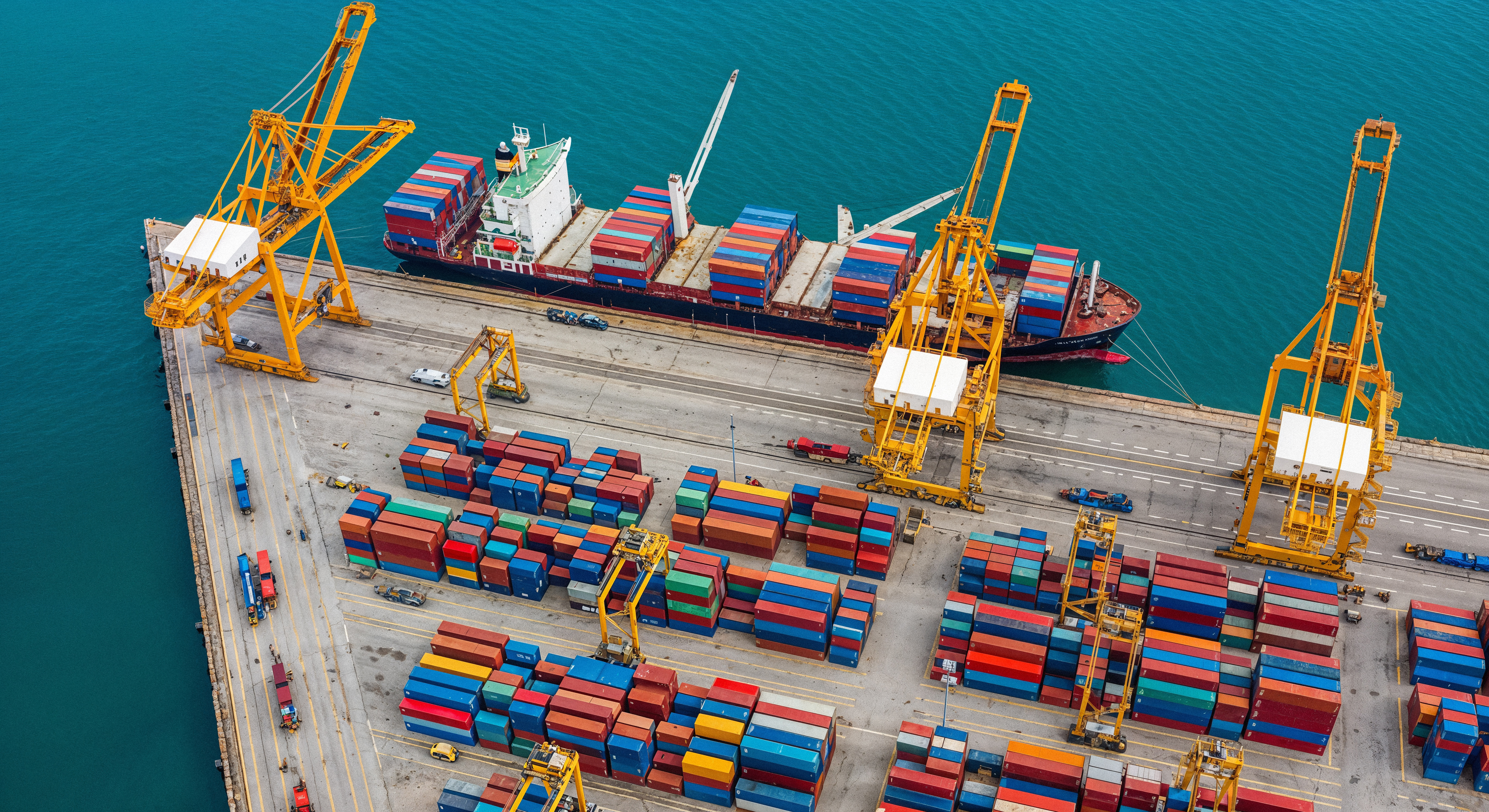
The U.S. Supreme Court could issue a ruling any day that invalidates over $129 billion in tariffs collected under the Trump administration's use of emergency economic powers. For the 301,000 U.S. importers who've paid these levies across 34 million entries in 2025, this could mean substantial refunds—but only if you can prove what you paid and move quickly.
The last time the federal government processed mass tariff refunds (the harbor maintenance fee case in the late 1990s), it took years. Companies that had their documentation ready got paid faster. Those that had to reconstruct records from fragmented systems waited.
This time can be different, but you have to prepare now.
What's at Stake
The Supreme Court is reviewing the legality of the "reciprocal tariffs" and "fentanyl tariffs" imposed on most U.S. trading partners throughout 2025. A federal appeals court already found that the Trump administration overstepped its authority by invoking the International Emergency Economic Powers Act (IEEPA) to implement these tariffs.
The scale is staggering. According to data from the Cato Institute tracking IEEPA tariffs:
If the Supreme Court agrees with the appeals court, importers could be eligible for refunds on duties paid since the tariffs took effect. The reciprocal tariffs alone account for 61% of total IEEPA revenues meaning the average importer has significant exposure.
The problem? According to customs experts, importers will need to "go through some sort of due-diligence process" to prove what they paid and what they're owed before filing claims with U.S. Customs and Border Protection.
The Documentation Challenge No One's Ready For
Here's what makes this particularly difficult: 2025 has been the most volatile tariff year in modern U.S. trade history.
Fifty modifications to the U.S. tariff code were made in 2025—half of them from IEEPA actions. That means:
Now you need to untangle which of your 34 million collective entries were subject to which IEEPA tariff, at what rate, on what date.
For each refund claim, you need to link multiple data points:
The data is fragmented:
Reconstruction at scale is nearly impossible:
Most companies can't quickly answer basic questions like:
When you're looking at potentially hundreds or thousands of entries, manual reconstruction isn't feasible.
Why the February Deadline Matters
CBP is launching an all-electronic refund process in February 2026, eliminating paper checks entirely. This isn't optional. If you want your refund, you'll need to file electronically.
But here's the catch: CBP hasn't announced the specific process for IEEPA refunds yet. We only know it will be electronic, it will require documentation, and it will likely involve audits of claims before processing.
When the Supreme Court rules, there will be a scramble. The companies that can file clean, well-documented claims quickly will get paid faster. The ones that need months to reconstruct their 2025 entry history will be waiting in line behind everyone else.
Why This Keeps Happening
The IEEPA tariff situation is just the latest— and most dramatic — example of a fundamental problem in global trade: systems capture outcomes but lose the decision context.
Your broker files an entry. Your bank processes a payment. Your ERP records the transaction. But the why—which tariff program applied, what classification was used, what rate was in effect that week, what documents supported the decision—lives in email threads, phone calls, and someone's memory.
This is fine when everything runs smoothly. It's a nightmare when you need to reconstruct 34 million entries' worth of decisions made across the most volatile tariff year in modern history.
And it's not just about refunds. Consider what companies like Balsam Brands noted: they're out millions in costs from supply chain changes made in response to tariff uncertainty—bonded warehousing, cargo rerouting, administrative expenses. These decisions happened because tariff rates were changing constantly, and companies had no infrastructure to capture why they made those calls.
What Importers Should Do Now
1. Audit your exposure across all 2025 entries:With 50 tariff code modifications in 2025 alone, you need to identify which of your entries were subject to IEEPA tariffs—and which specific program (reciprocal vs. fentanyl tariffs). Calculate potential refund amounts by HTS code, country of origin, and time period. If you can't do this easily, that's a red flag.
2. Gather documentation while it's still accessible: Don't wait for the Supreme Court decision to start pulling records. With potentially thousands of entries to document, you need commercial invoices, entry summaries, and payment proofs organized and accessible now—not scattered across broker portals, email inboxes, and finance systems.
3. Understand which tariff program applies to each entry: The reciprocal tariffs and fentanyl tariffs operated under different structures. According to Cato Institute analysis, the reciprocal tariffs account for 61% of total IEEPA revenues, while fentanyl tariffs on China represent 28.4% and tariffs on Mexico and Canada account for 6.7%. Your China imports might have been subject to both fentanyl tariffs AND reciprocal tariffs at different points. Your refund claim needs to specify which program you're claiming against for each entry.
4. Prepare for the electronic filing requirement: CBP's new electronic refund system launches in February. Paper-based documentation won't cut it. Whatever process CBP announces for IEEPA refunds will require digital submission of evidence.
5. Consider your infrastructure gap: When 301,000 importers are simultaneously trying to reconstruct decisions made across 34 million entries in the most volatile tariff year in memory, the ones with real-time decision capture will have a massive advantage.
Beyond Refunds: Building for Perpetual Tariff Volatility
Here's what 2025 really taught us: tariff certainty is dead.
Fifty tariff code modifications in one year. Half from IEEPA authority. Rates changing mid-year. Different programs stacking on top of each other. This isn't an anomaly—this is the new normal.
Whether it's IEEPA authority, Section 301 exclusions, or the next round of trade policy changes, companies need infrastructure that:
The importers who struggle with IEEPA refund claims will be the same ones caught flat-footed by whatever comes in 2026. The ones who have their documentation ready—who can prove what they paid, when, under which program—will move faster, file cleaner claims, and get paid sooner.
The Court Could Rule Any Day
The Supreme Court meets Friday and has indicated it may announce decisions on pending cases. Once the ruling drops, the clock starts.
With $129 billion in potential refunds across 301,000 importers and 34 million entries, this will be the largest tariff refund event in U.S. history. Don't wait to organize your documentation. Don't assume your broker or your ERP has everything you need. And don't underestimate how long it takes to reconstruct decision context from fragmented systems—especially when you're dealing with a year where the tariff code changed 50 times.
The companies that treat this as an infrastructure problem—not just a one-time refund opportunity—will be ready for whatever 2026 brings.
At Wove, we build decision intelligence infrastructure for global trade operations. Our platform captures the context behind logistics decisions in real-time, creating audit trails that make compliance, refunds, and operational analysis dramatically faster. If you're preparing for potential IEEPA tariff refunds and want to understand your exposure across your 2025 entries, let's talk.