
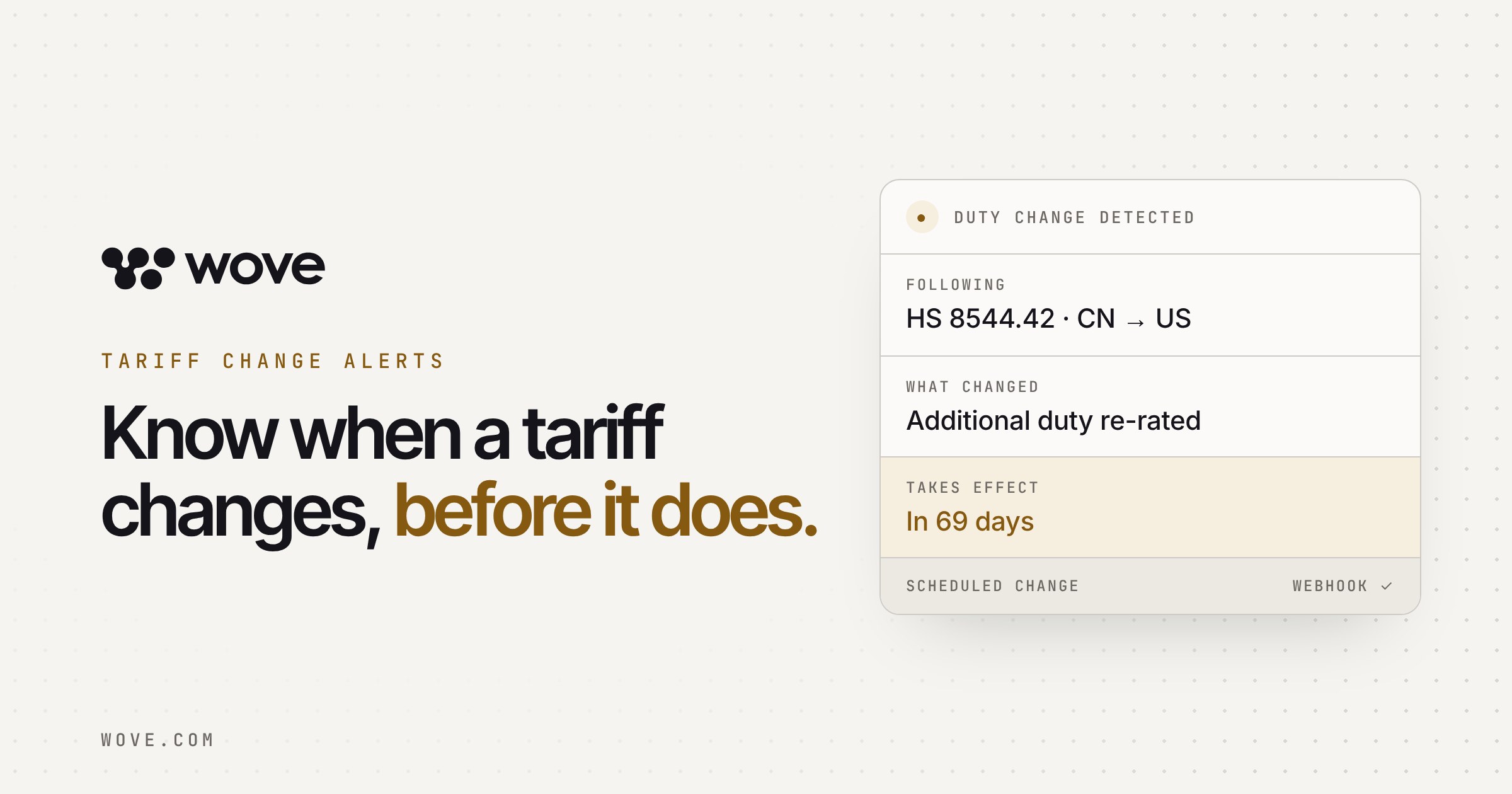
Most importers find out about a tariff change when the duty bill arrives. By then the margin is gone, the quote is wrong and the shipment is already on the water.
Today we're launching tariff change alerts in Wove. Follow any HS code and origin, and Wove tells you when its duty treatment changes. Changes that are scheduled but not yet in force come with the date they take effect, so you can act before they hit.
The usual alternative is someone on your team rechecking rates by hand, or a script that looks up every code on a schedule and compares the answers. Both are slow, both miss things, and both drown you in false alarms.
How it works
You choose what to watch, and Wove does the watching.
1. Pick a code. Enter an HS code at 6, 8 or 10 digits. Follow a broader heading, like 8544.42, and every line beneath it is covered.
2. Pick a destination and origins. Choose the market you import into, and up to 50 countries of origin you buy from.
3. Choose what to hear about. Changes in force today, changes scheduled for the future, or both. For scheduled changes, you choose how far ahead to look, up to a year.
4. Get alerted. When the duty on something you follow changes, Wove sends one alert covering everything that moved. If nothing changed, you hear nothing.
Only real changes
Tariff schedules are revised constantly. In the US, a new revision of the HTSUS lands every week or two, and most of them don't change what anyone pays. They renumber lines, reword descriptions and restate the same duties.
If you compare lookups yourself, every one of those revisions looks like a change. Your team spends its time chasing differences that don't matter, and eventually stops looking.
Wove compares what decides the duty, not the text of the schedule. If a revision restates the same duties, you won't hear from us. When an alert arrives, something actually moved.
See changes before they take effect
Many tariff changes are announced weeks or months before they apply. Wove picks them up as soon as they're published and tells you the exact date they take effect.
That means you learn in October that a rate moves on January 1, not on January 1. You have time to pull shipments forward, renegotiate with suppliers, update customer pricing or look at other origins, before the new rate costs you anything.
What counts as a change
An alert means something that decides the duty on your goods has changed:
Coverage
Tariff change alerts work for every import market in the Wove tariff engine: the United States, Canada, Mexico, the United Kingdom, the European Union, Australia, Malaysia and Singapore.
Each alert is tied to one destination, because that decides which tariff schedule applies. To follow the same code into two markets, set up two alerts. They can share the same delivery endpoint.
For your technical team
Alerts are delivered by webhook, so changes land straight in the systems your team already uses: your ERP, your product catalog, a Slack channel or a compliance queue.
Full details are in the API documentation.
Get started
Tariff change alerts are live now for every market in the Wove tariff engine. If you want to see what they'd catch on your own codes, book a demo and we'll set up alerts for your top lines together.